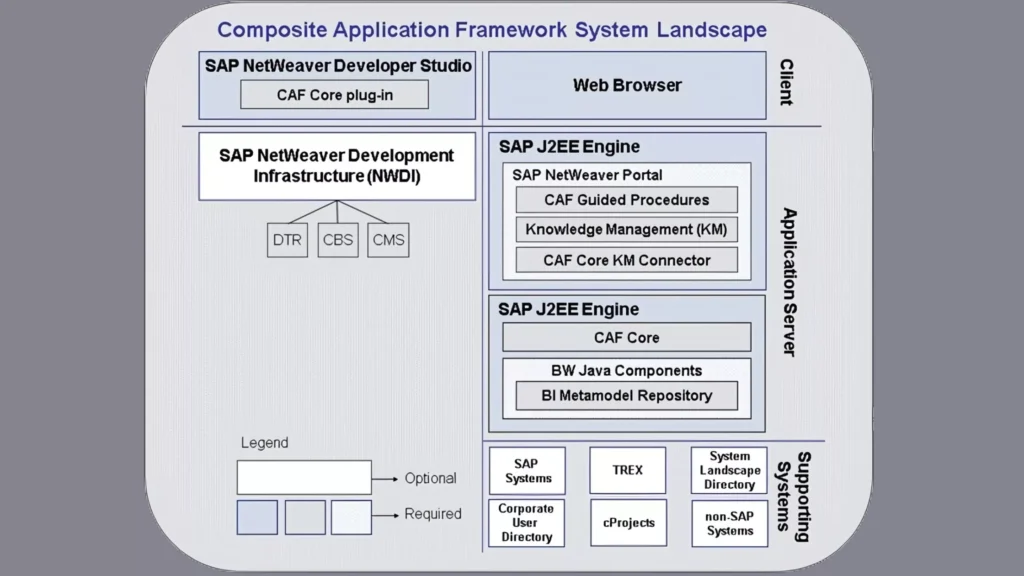
**Why the Composite Application Framework Is Shaping the Future of Software Development in the US In recent years, software architecture has evolved rapidly, driven by growing demands for faster, more scalable, and maintainable digital solutions. At the heart of this transformation is the composite application framework—an emerging approach gaining real traction across industries. More developers, teams, and organizations are turning to this model not just for its technical strengths, but for how it aligns with modern trends in digital agility and innovation. The composite application framework brings together modular components—identity, UI, backend logic, and data layers—into a cohesive architecture. This structure allows teams to build complex applications with greater consistency and faster iteration, reducing technical debt and improving time-to-market. As businesses face increasing pressure to deliver seamless user experiences and adapt quickly to market shifts, this framework offers a practical path forward. At its core, the composite application framework operates by defining clear interfaces between reusable components, enabling independent development, testing, and deployment. This modular approach supports team autonomy while maintaining integration across systems. It works seamlessly with modern development tools and cloud-native environments, making it especially well-suited to the agile development cycles dominating the U.S. tech landscape today. Despite its advantages, many remain unsure about how this framework fits into real-world applications. Understanding its mechanics and potential is key to staying competitive. Let’s explore how it functions and what it can deliver.
The composite application framework structures software by combining discrete yet interconnected building blocks—each responsible for a specific function such as authentication, data access, or user interaction. Instead of building monolithic codebases, developers assemble these components according to predefined rules and interfaces. This modular design enables teams to update or replace individual parts without disrupting the entire system. Interfaces act as contracts between components, ensuring smooth communication and reducing integration complexity. As a result, development cycles shorten, and system resilience improves through isolated failures. By promoting reusability and standardization, the framework supports scalable, maintainable applications—especially critical for enterprises managing multiple platforms and evolving digital services. Its integration with popular development ecosystems simplifies deployment and enhances compatibility with emerging tools. ## Common Questions About the Composite Application Framework **How flexible is the composite application framework?** It offers strong adaptability, allowing teams to mix and match components tailored to specific needs, whether for internal tools, customer-facing apps, or cloud services. This flexibility supports diverse use cases without compromising structure. **Is it difficult to implement?** While the initial setup requires careful planning, its modular nature simplifies onboarding for new modules. Clear interfaces and documentation reduce learning curves, making it accessible even to teams new to the approach. **Will it improve app performance?** Yes. By isolating functions and enabling targeted optimization, applications built with this framework often deliver faster load times, better scalability, and easier maintenance. **Can it work with existing systems?** Most frameworks are designed to integrate gradually, supporting hybrid approaches. Legacy systems can gradually transition into the composite structure, minimizing disruption. **Is it secure by design?** Security is embedded through isolated component responsibilities and defined communication layers, reducing risk exposure. However, proper implementation and ongoing monitoring remain essential. ## Real-World Opportunities and Practical Considerations Adopting a composite application framework offers compelling benefits: faster development, lower technical debt, and improved scalability—key assets in competitive U.S. markets. Teams gain the ability to respond quickly to user needs and emerging trends while maintaining system integrity. Yet, no technology fits every scenario. Implementation requires investment in planning, training, and infrastructure. Transitioning from legacy systems may involve trade-offs, particularly around upfront effort versus long-term gains. Success depends on clear objectives and alignment across technical and business teams. Critically, the framework is not a one-size-fits-all solution. It thrives in complex environments demanding adaptability but may be overkill for small-scale projects with simple needs. Assessing scope and resources helps avoid unnecessary complexity. ## Common Misconceptions About Composite Application Frameworks A frequent myth is that composite frameworks are overly complicated or only for large enterprises. In reality, modular structures benefit teams of all sizes by clarifying responsibilities and streamlining collaboration.
Adopting a composite application framework offers compelling benefits: faster development, lower technical debt, and improved scalability—key assets in competitive U.S. markets. Teams gain the ability to respond quickly to user needs and emerging trends while maintaining system integrity. Yet, no technology fits every scenario. Implementation requires investment in planning, training, and infrastructure. Transitioning from legacy systems may involve trade-offs, particularly around upfront effort versus long-term gains. Success depends on clear objectives and alignment across technical and business teams. Critically, the framework is not a one-size-fits-all solution. It thrives in complex environments demanding adaptability but may be overkill for small-scale projects with simple needs. Assessing scope and resources helps avoid unnecessary complexity. ## Common Misconceptions About Composite Application Frameworks A frequent myth is that composite frameworks are overly complicated or only for large enterprises. In reality, modular structures benefit teams of all sizes by clarifying responsibilities and streamlining collaboration. Another concern is that these frameworks reduce speed. On the contrary, their emphasis on reusable components accelerates development and simplifies future updates. Finally, some question security implications. While components operate independently, this isolation actually enhances protection by containing vulnerabilities and enabling targeted security controls. ## Who May Benefit From Using Composite Application Frameworks? This approach shines across multiple sectors. Enterprises building scalable platforms, developers crafting enterprise-grade SaaS tools, and startups aiming to iterate quickly—all find value in its structure. Integration teams, digital transformation squads, and cross-functional product teams also leverage its clarity to align technical execution with business goals. Its versatility makes it suitable for finance, healthcare, e-commerce, and professional services navigating digital evolution. ## Soft Invitation to Keep Learning The composite application framework represents more than a technical shift—it signals a broader movement toward smarter, more sustainable software development. For U.S. professionals seeking influence, efficiency, and future-proof solutions, understanding this model is a valuable step forward. Exploring its nuances opens doors to innovation that balances ambition with practicality. Stay informed, experiment cautiously, and let value—not hype—guide your choices. In an era of constant change, this framework offers a roadmap to resilience without sacrificing clarity. The path forward is clear: embrace responsible innovation, learn deeply, and engage thoughtfully. The composite application framework invites curiosity, not pressure—and in that space, real progress begins.
Another concern is that these frameworks reduce speed. On the contrary, their emphasis on reusable components accelerates development and simplifies future updates. Finally, some question security implications. While components operate independently, this isolation actually enhances protection by containing vulnerabilities and enabling targeted security controls. ## Who May Benefit From Using Composite Application Frameworks? This approach shines across multiple sectors. Enterprises building scalable platforms, developers crafting enterprise-grade SaaS tools, and startups aiming to iterate quickly—all find value in its structure. Integration teams, digital transformation squads, and cross-functional product teams also leverage its clarity to align technical execution with business goals. Its versatility makes it suitable for finance, healthcare, e-commerce, and professional services navigating digital evolution. ## Soft Invitation to Keep Learning The composite application framework represents more than a technical shift—it signals a broader movement toward smarter, more sustainable software development. For U.S. professionals seeking influence, efficiency, and future-proof solutions, understanding this model is a valuable step forward. Exploring its nuances opens doors to innovation that balances ambition with practicality. Stay informed, experiment cautiously, and let value—not hype—guide your choices. In an era of constant change, this framework offers a roadmap to resilience without sacrificing clarity. The path forward is clear: embrace responsible innovation, learn deeply, and engage thoughtfully. The composite application framework invites curiosity, not pressure—and in that space, real progress begins.
The Hazards of Zapaka That Will Change How You See This Obsession Forever
You Logged Into WSFS—and Faced the Shocking Truth Behind Every Click!
